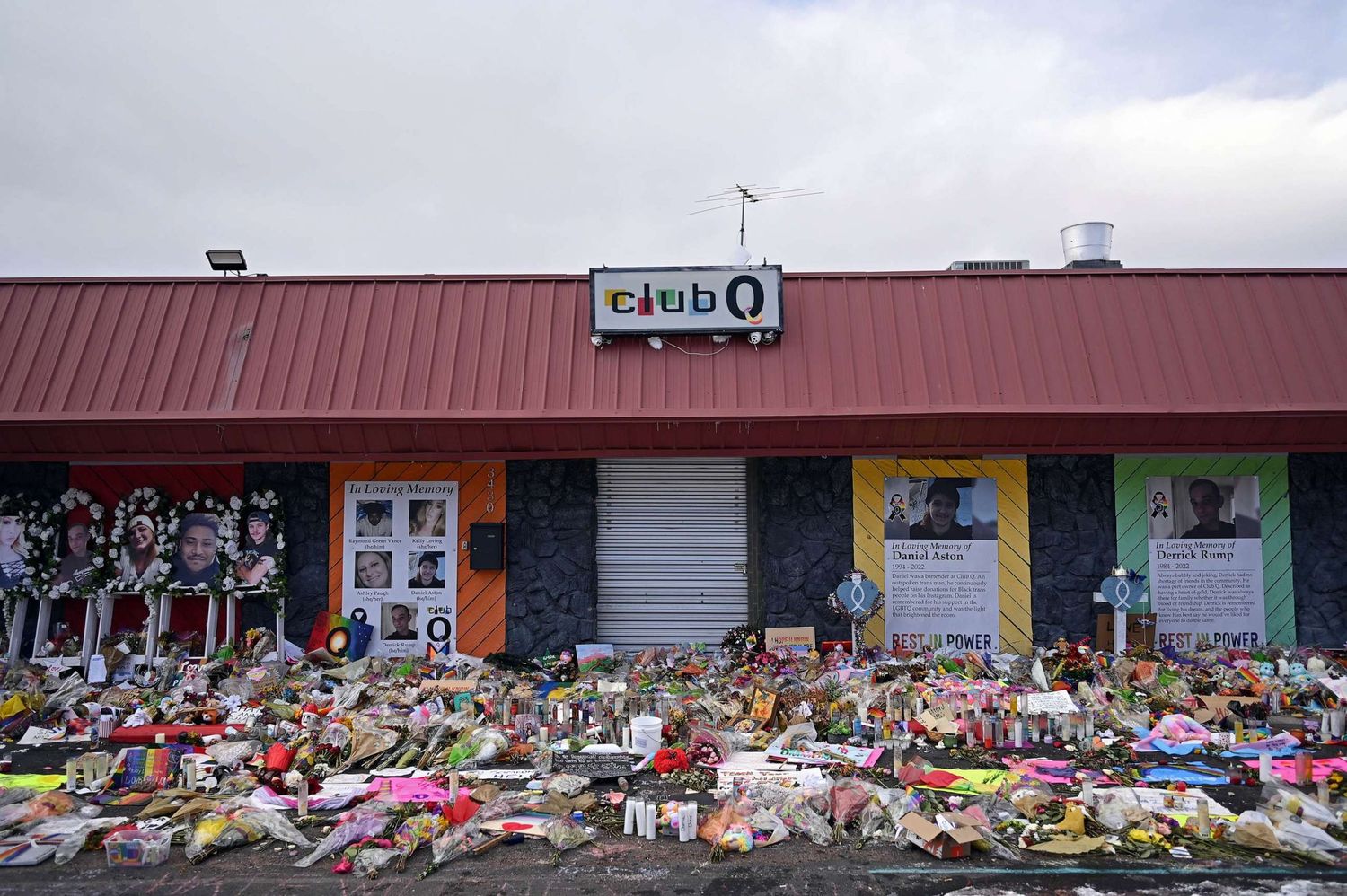
Club Q and the memorial for the victims of the shooting photographed in Colorado Springs, Colo., Nov. 29, 2022.
Hyoung Chang/Denver Post via Getty Images
My most recent projects look at the intersection between art, installation, and activism. This project speaks about gun violence, specifically mass shootings, in the United States. This topic is deeply personal, as I have seen friends and communities from my hometown mourn over the loss of loved ones because of gun violence. Through this research, I set out to find connections between visual arts and social change. I am originally from Denver, Colorado, where there have been 61 mass shootings in the last 10 years with 328 people shot, resulting in 82 killed and 246 injured.
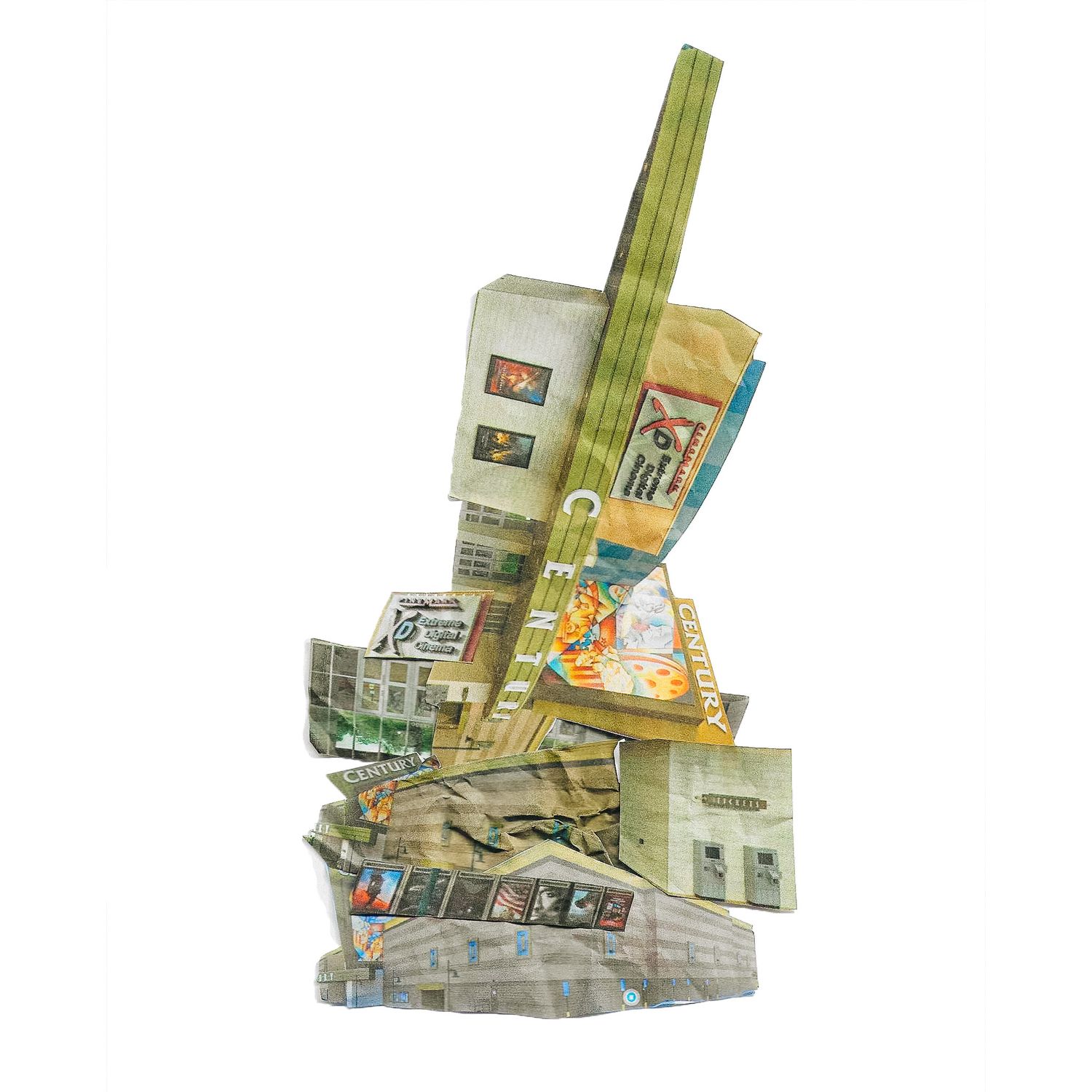
Aurora Movie Theater, 2012
12 dead, 58 wounded
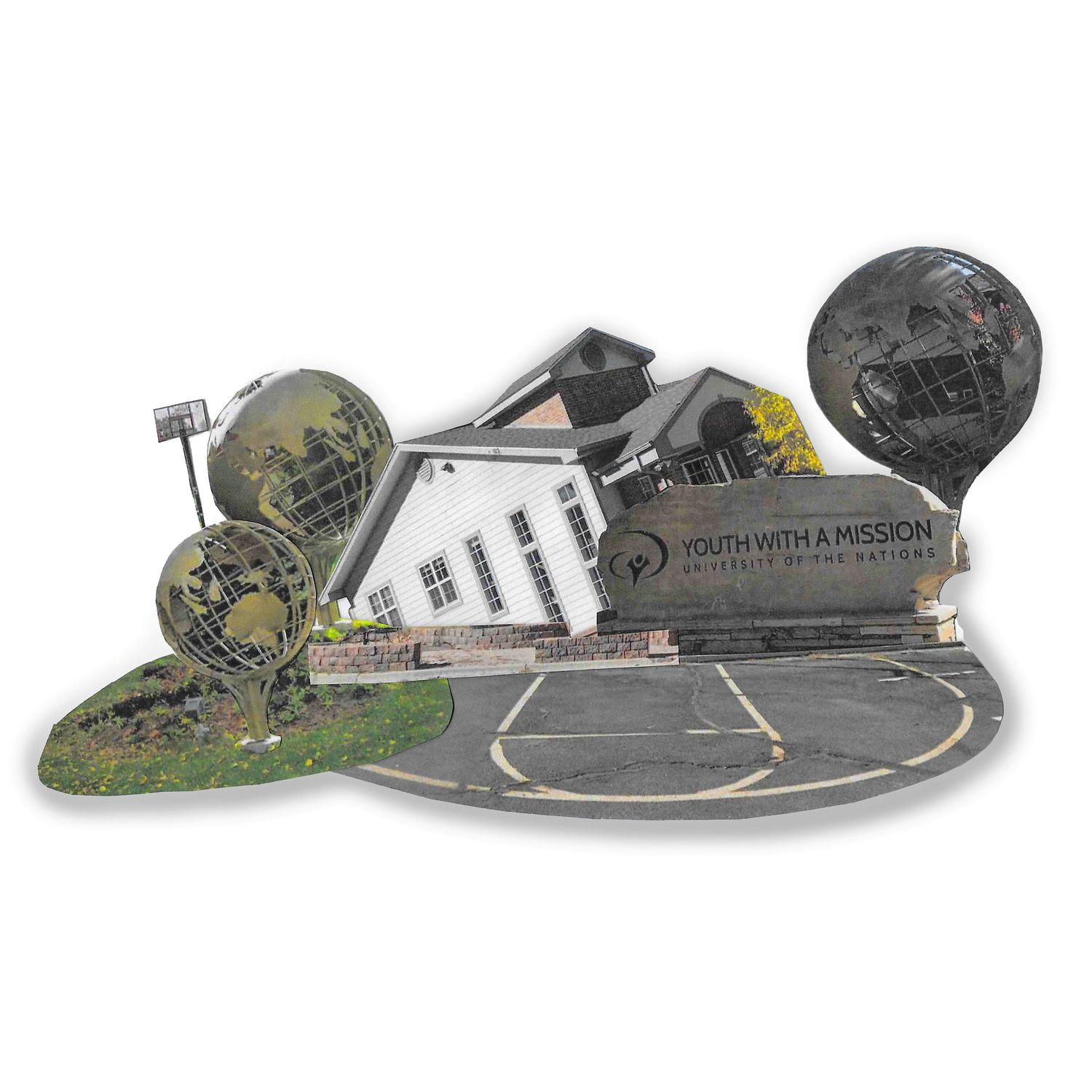
Youth With a Mission & New Life Church, 2007
4 dead, 5 wounded
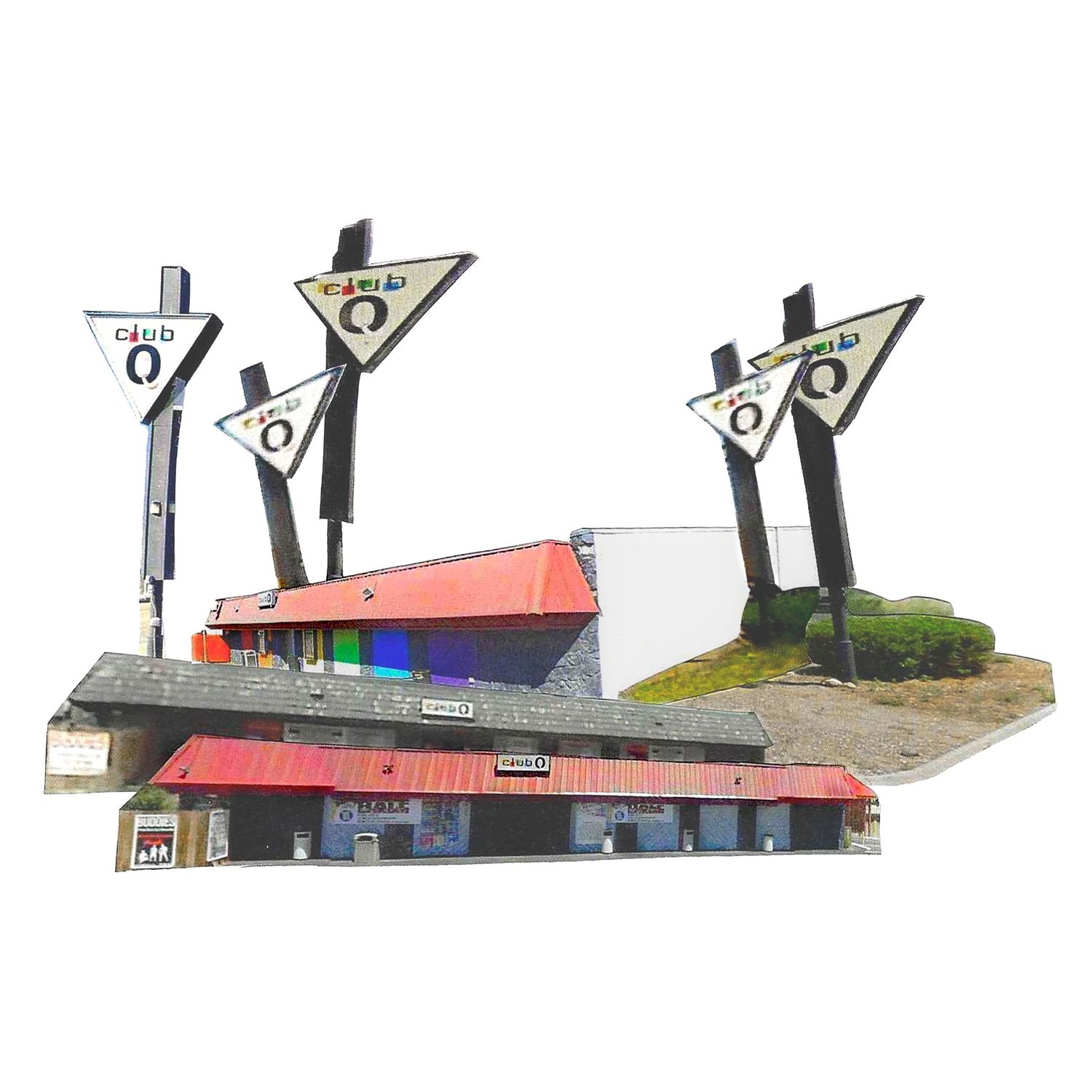
Club Q, 2022
5 dead, 19 wounded
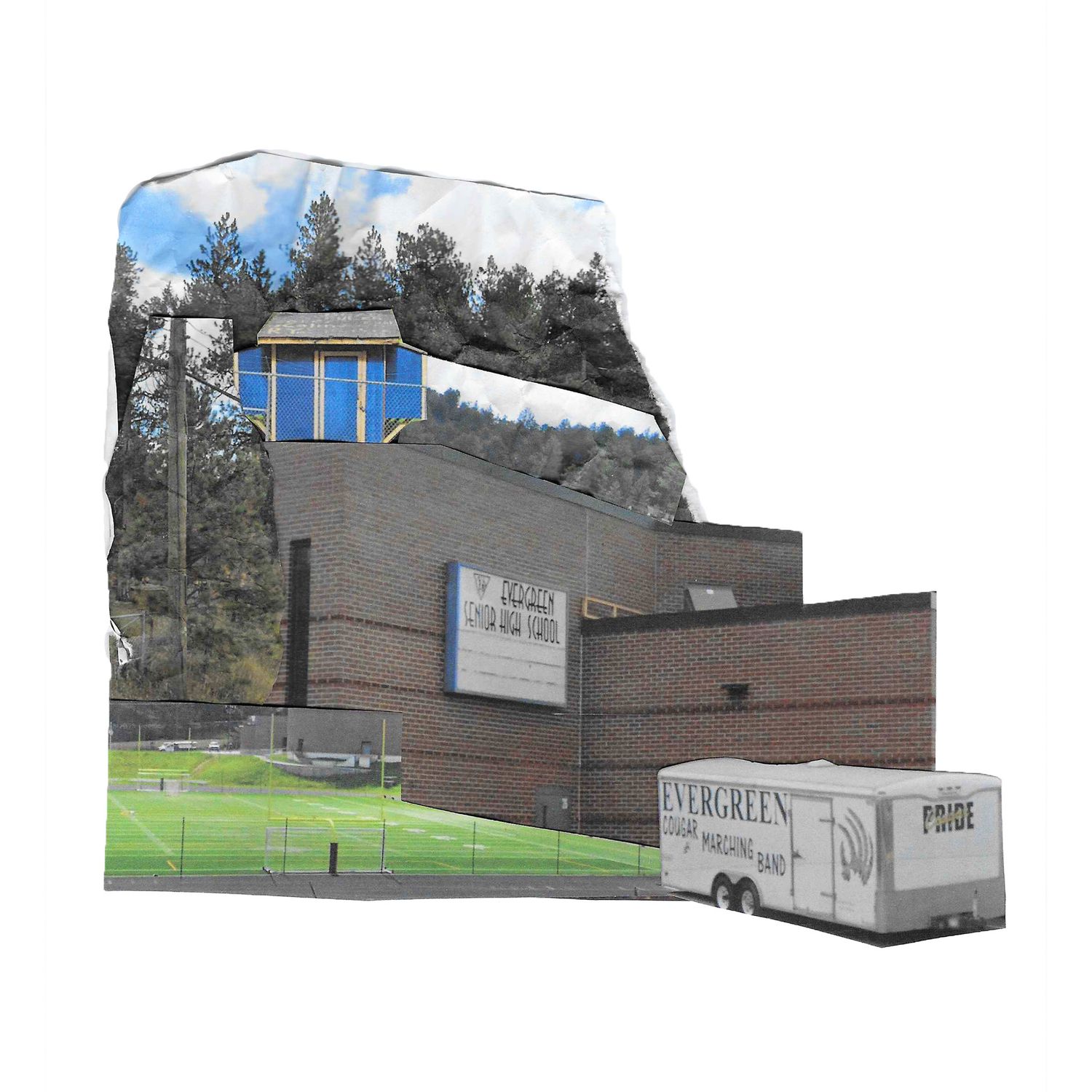
Evergreen High School, 2025
0 dead, 2 wounded
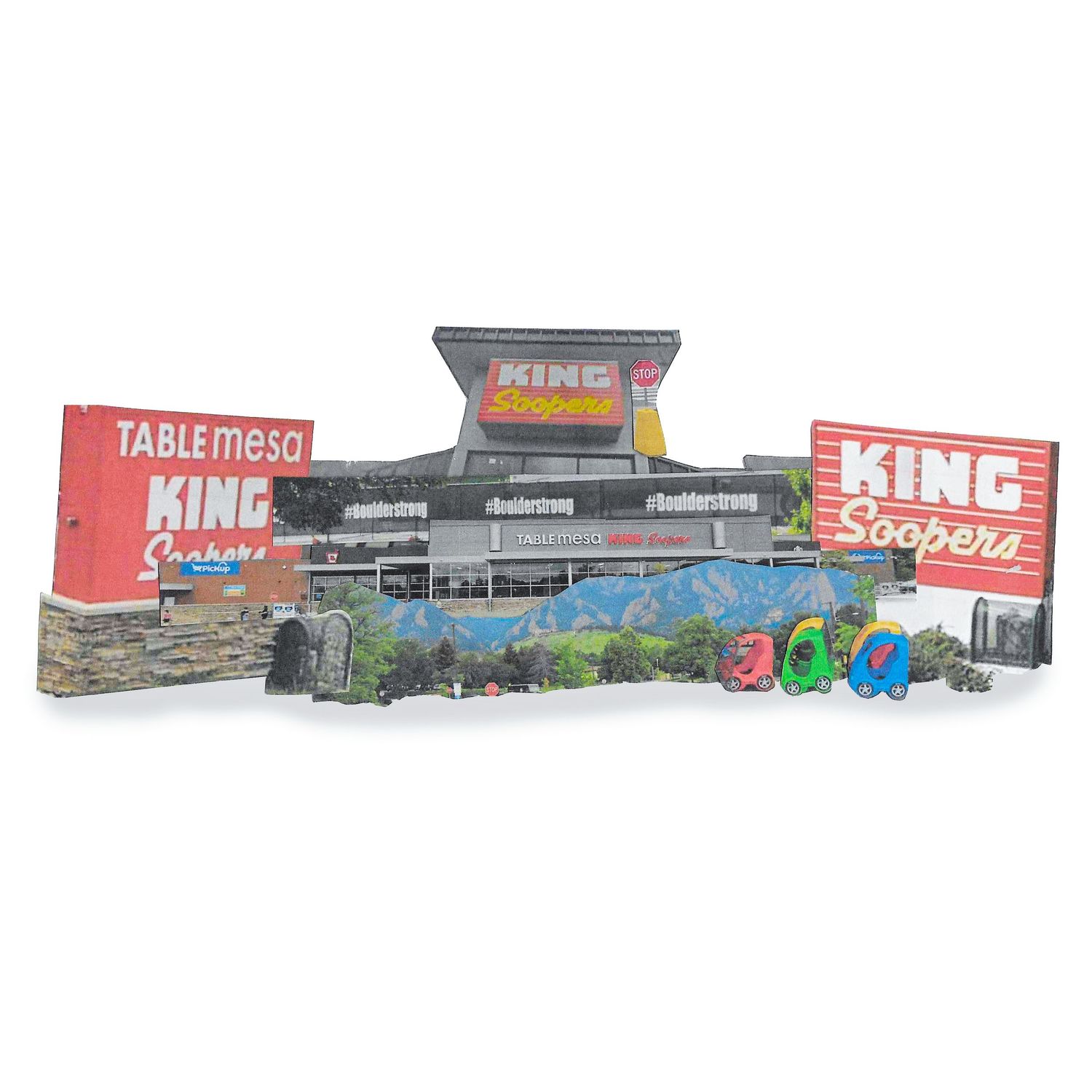
King Soopers Boulder, 2021
10 dead, 1 wounded
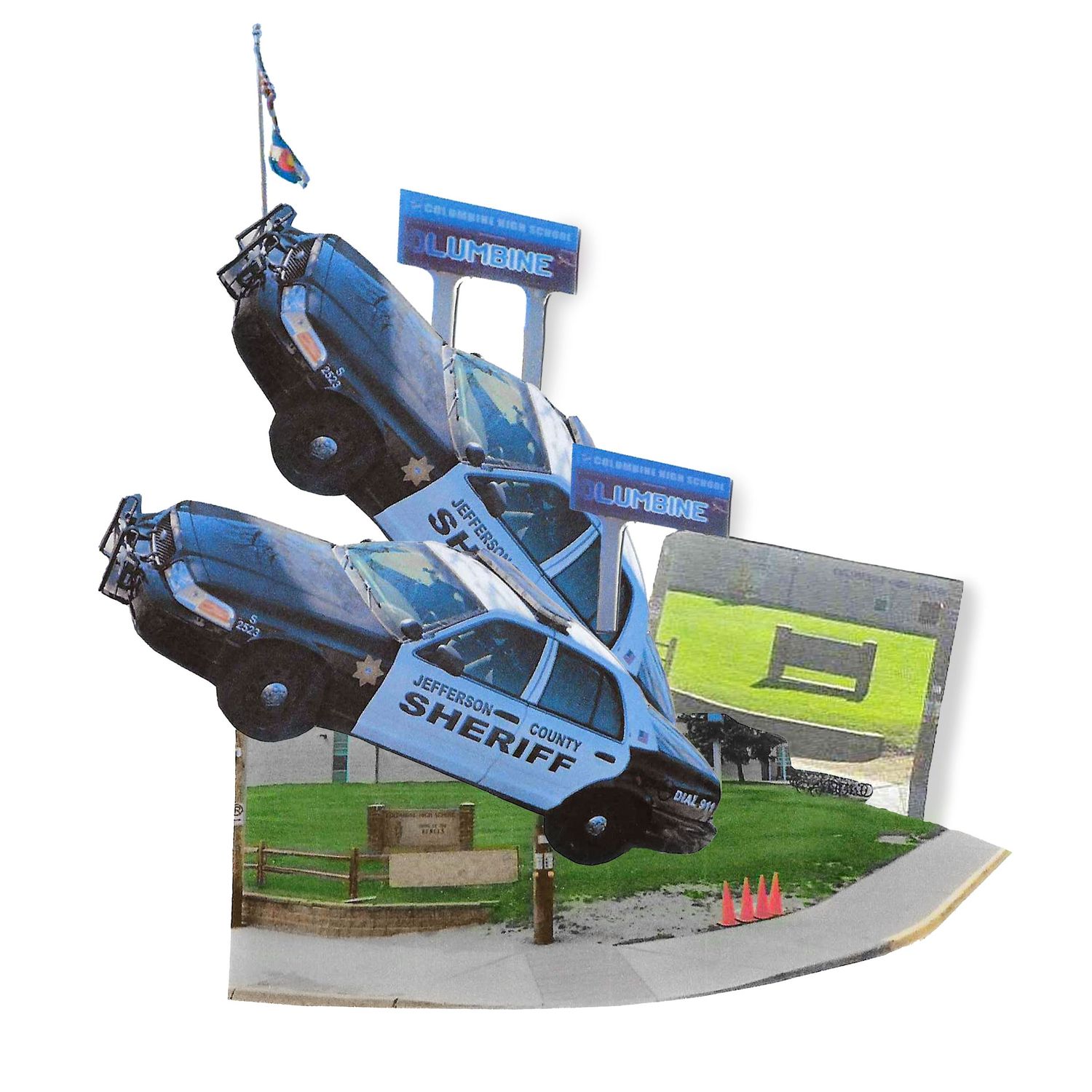
Columbine High School, 1999
13 dead, 21 wounded
The department of public health and safety sates that Regardless of the setting or scale, all mass shootings impact the communities within which they occur and have long-lasting physical, mental, and emotional consequences. This idea got me thinking about the spaces where mass shootings occur, and their long-lasting effects on communities.
When a mass shooting takes place, the aura of the location changes permanently. With the number of mass shootings in the U.S. increasing drastically over the last decade, these “new memorials” are taking over the once romanticized American landscape.
I became very fixated on this idea of a landscape transforming into a new memorial , and led me to start a collage project, and video project, addressing how communal spaces change after an act of gun violence. The goal of these projects is to continue and push forward conversations around the long-lasting effects of gun violence in the U.S .
Recent Removal of Confederate Monuments
The conversation around gun violence blew up during the COVID-19 pandemic in 2020, when George Floyd was murdered by a white police officer. This act prompted nationwide protests against the everyday violence and discrimination Black Americans face across the United States. Protesters often targeted public monuments as symbols of white supremacy, toppling, tagging, or campaigning to remove statues from the landscape. In 2020 alone, nearly 100 Confederate symbols were removed from the South, as schools, university buildings, and highways dedicated to Confederate leaders were renamed. forcing the nation to rethink the landscapes and purpose of American public art monuments.
Many of these statues to Confederate leaders were erected from 1890 to 1925, a time which marked the birth of Jim Crow segregation laws throughout the South, that legalized racial segregation. The laws were meant to marginalize African Americans by denying them the right to vote, hold jobs, get an education or other opportunities. They existed for about 100 years, from the post-Civil War era until 1968. In 2016, the Southern Poverty Law Center estimated that there were over 1,500 "symbols of the Confederacy in public spaces" in the United States.
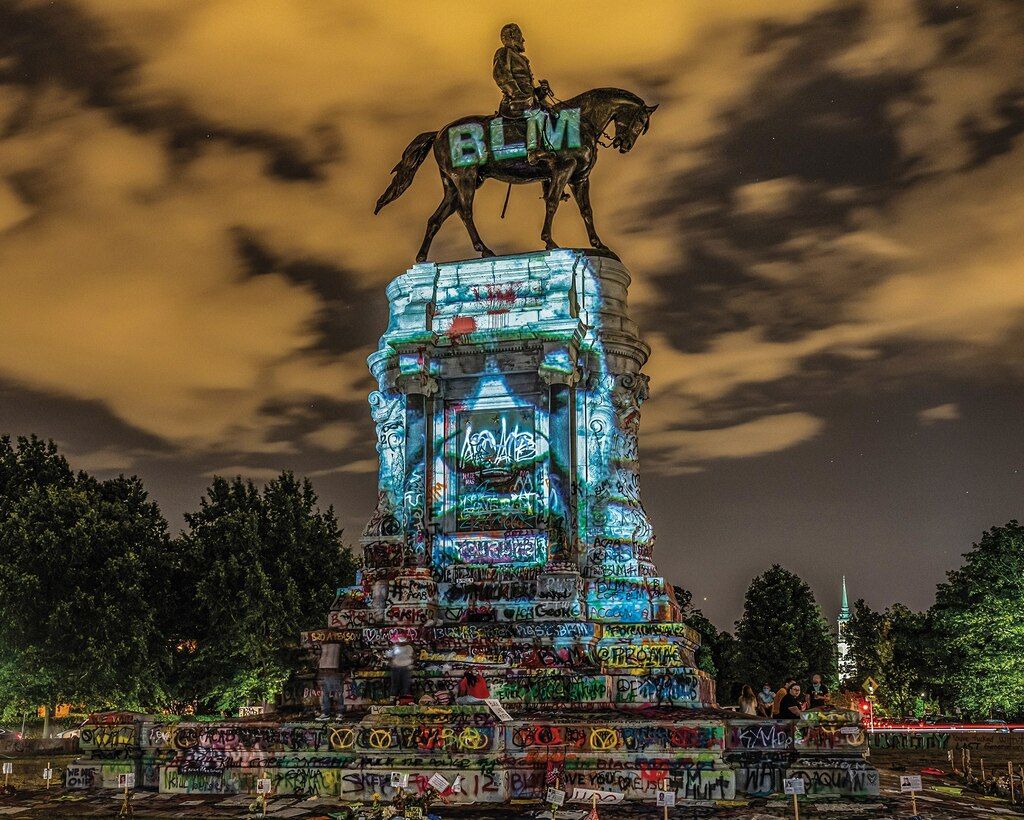
A portrait of George Floyd was projected onto the statue of Confederate general Robert E. Lee in June. With several Confederate statues removed from Monument Avenue in Richmond, Virginia, the governor is now asking the state to fund the creation of a more inclusive public space.
PHOTOGRAPH BY KRIS GRAVES, NATIONAL GEOGRAPHIC
Here’s what might replace America’s disappearing Confederate monuments
By National Geographic
Mark Elliott, a history professor at University of North Carolina states that “All of those monuments were there to teach values to people, that’s why they put them in the city squares. That’s why they put them in front of state buildings.”
Activist Nana Smith states, "I think what we have now are more and more people who are refusing to be complicit in such a deeply problematic and such a deeply entrenched history,"
Bobbie O'Connor from the Florida Times-Union suggests that “Confederate monuments are reminders of Jim Crow. Confederate monuments were built in Jacksonville and across the South during a time when Jim Crow laws and customs turned African-Americans into second-class citizens. The Confederate monument in the city’s town square, Hemming Park, is a visual representation of Jim Crow. That is why that monument must be destroyed.”
City officials, researchers, Artists, and activists are engaged in now questioning how to move forward with public monuments.
Artists are at the forefront of this conversation, creating work as public installations, conducting research in museums and gallery spaces, and involving the public into their artworks to further push conversations around memorials, gun violence, and the ever changing American landscape. Many of these artists are students, and are personal survivors of mass shootings.
This discussion demands a reframing of monuments themselves. Definition of the word Monument according to the Merriam-Webster dictionary:
(1) a lasting evidence, reminder, or example of someone or something notable or great
(2) memorial stone or a building erected in remembrance of a person or event
Which brings us to our concluding point: Artists are redefining monuments. They are using their artistic mediums and platforms to speak up and take action in how their own generation, along with future generations, will approach public memorials. Leaving us to question what the future landscape will look like at the cross section between art and public memorials in the United States.
Please click the link to see visual artist examples.